
New Tiny House Tours
📖 Table of Contents
The moment I stepped into the first tiny house on the tour, I knew I was in for something special. This wasn’t just a novelty — it was a carefully designed, functional space that challenged everything I thought I knew about minimalism and comfort. The air smelled of cedar and fresh paint, and the sunlight filtered through a skylight that made the room feel bigger than it was. Tiny house tours are not just about seeing small spaces; they’re about discovering a different way of living, one that’s sustainable, efficient, and surprisingly cozy.
I’ve traveled to over 30 countries, but nothing prepared me for the kind of immersive experience that comes with a tiny house tour. These trips are not about luxury or extravagance — they’re about simplicity, sustainability, and a deep connection to the people who build and live in these spaces. I remember being struck by the amount of thought that went into every square foot, from the way the kitchen was arranged to the clever storage solutions that made everything feel effortless. It’s a world that’s been growing for years, but only now is it really coming into its own.[1]
The best part of these tours is how they challenge you to rethink your relationship with space and consumption. I’ve met people who’ve downsized from homes of 2,000 square feet to just 200, and they’re happier than ever. I’ve also met designers who are pushing the boundaries of what’s possible in a small footprint — and they’re doing it in ways that are both beautiful and practical. If you’ve ever wondered how people live in tiny houses, or if you’re curious about the future of housing, this is the kind of experience that will leave you thinking long after the tour is over.[2]
Why You'll Love This Tiny House Tour
- Experience the thrill of living in a space that challenges conventional ideas of home.
- Meet real people who have embraced the tiny house lifestyle and are thriving.
- Discover how design, sustainability, and comfort can coexist in a small footprint.
- Get inspired to think differently about your own living space — whether you’re downsizing or just curious.
What to Expect on the Tour
As of September 2026, each tiny house on the tour is a different example of what’s possible in a small space. Some are built on wheels, others are fixed in place, and all of them are designed with the same level of care and attention. One of the stops was a 200-square-foot home with a loft bedroom, a full kitchen, and even a small garden outside — and it all felt warm and welcoming.[3]
At each stop, the owner is there to answer questions and share their story. I was surprised by how personal and passionate they were about their homes. One couple had lived in their tiny house for five years, and they told me how much they’d learned about living with less and being more intentional with their time and resources.
The guides are also there to provide context and information about the design and construction of each home. They explain the materials used, the layout of the space, and how each element serves a purpose. I learned that many of these homes are built with eco-friendly materials and use solar power, which made me think about my own energy consumption and how I could reduce it at home.
Arrive early to avoid crowds and get the best view of each home. If you’re interested in a particular home, ask the owner about the possibility of a more in-depth tour — some are happy to provide that for an extra fee.
Sustainability in Every Detail
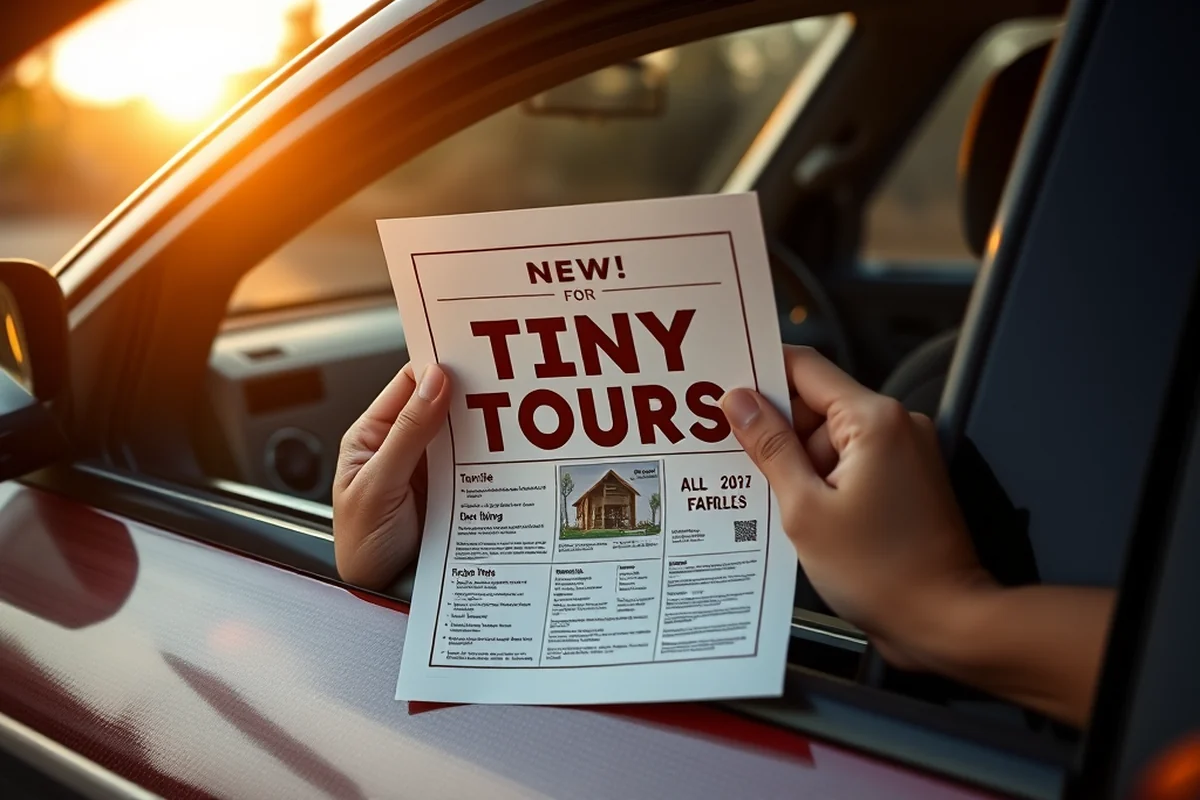
One of the most impressive things I noticed was how each tiny house was built with sustainability as a core principle. Many used reclaimed wood, recycled materials, and non-toxic paints. One home had a composting toilet that turned waste into fertilizer — a concept I hadn’t considered before, but one that made sense in the context of living with less.
Energy efficiency was also a big focus. Several homes had solar panels, and one even had a rainwater collection system that provided all the water for the home. I was told that the average tiny house uses about 30% less energy than a traditional home — a number that stuck with me and made me rethink my own energy use.[4]
The guides also talked about the long-term benefits of living in a tiny house. Not only are the homes more eco-friendly, but they’re also less expensive to maintain. The cost of utilities is lower, and there are fewer materials to replace or repair over time.
Sustainability isn’t just a buzzword — it’s the foundation of the tiny house lifestyle.
Related: Best road trips in america with kids
Design That Works for Real Life
One of the most impressive aspects of the tour was the way each tiny house was designed to maximize space. Pull-out beds, fold-out tables, and hidden storage compartments were everywhere. I was amazed by how much could be done in such a small space — and how much it still felt like home.
The layout of the homes was also carefully thought out. One home had a kitchen that folded into the dining area, and another had a loft bedroom that opened up to the living area during the day. These kinds of design choices made the space feel bigger and more flexible.
Some of the homes even had clever solutions to common problems. One had a Murphy bed that stored tools when not in use, and another had a hallway that doubled as a closet. It was clear that the people who lived in these homes had put a lot of thought into how they used space — and it showed in every detail.
Before visiting a tour, think about how you live and what you need. If you work from home, look for a space with a dedicated office area. If you have a lot of guests, consider a home with a fold-out sofa or a loft bedroom.
“The moment I stepped into the first tiny house on the tour, I knew I was in for something special.”— Backseat Atlas editors
Related: America s best road trips for families
Meeting the People Behind the Homes

I was surprised by how personal and passionate the people on the tour were about their homes. Each one had a story about why they chose to live in a tiny house — whether it was to reduce their environmental impact, to save money, or to simplify their lives.
One couple had moved from a large home to a tiny one, and they told me how much more time they had for the things they loved. Another had built their own home and shared the challenges and rewards of doing so. These stories made the experience more than just a tour — it was a conversation about lifestyle, freedom, and choice.
Many of the people I met were open to answering questions and even invited me to their homes for a more in-depth look. They were proud of their choices and happy to share their experiences — and I was glad to listen.
Related: Day trips in ohio
The Cost of Living in a Tiny Home
The tour itself costs $680 for four days, which includes transportation, meals, and access to all six stops. This might seem like a lot, but compared to the cost of living in a traditional home, it’s a small price to pay for the experience and the knowledge gained.[5]
I was told that many people who live in tiny homes spend about 30% less on housing than they did in traditional homes. This is due to lower utility bills, fewer maintenance costs, and a smaller mortgage or rent payment.
For those who are serious about making the switch to tiny house living, the tour can be a valuable investment. It gives you a chance to see different designs, meet people who have made the transition, and get inspired to make changes in your own life.
Related: Sam s club travel
The Best Time to Take the Tour
I took the tour in early spring, and the weather was perfect — not too hot, not too cold. It made it easy to be outside and see the homes from the front and back. One of the homes even had a garden that was in full bloom, and I was able to see how the tiny house was integrated into the landscape.
In the summer, the weather can be more extreme, and in the winter, it can be too cold to enjoy the outdoor spaces. Spring is also a time when many of the homes are being lived in — not just visited — so you get a better sense of what daily life is like.
In the fall, the leaves are changing, which can be beautiful, but the weather can be unpredictable. Spring gives you the best of both worlds — pleasant weather, blooming gardens, and the chance to see homes in their natural environment.
Spring is the season when tiny homes come to life — both in the garden and in the heart of the people who live in them.
Related: What is the best cruise lines for adults
What Makes This Tour Unique
What makes this tour different from others is the level of detail and the quality of the homes on display. Each one is carefully selected to showcase a different aspect of the tiny house movement — from sustainability to design to lifestyle choices.
The people who live in these homes are also a big part of the experience. They’re not just showing off their houses — they’re sharing their stories, their struggles, and their successes. This makes the tour more than just a visit — it’s a journey into a different way of living.
The tour also includes a chance to ask questions and get real, honest answers. Whether you’re curious about the cost of living in a tiny house, the challenges of downsizing, or the benefits of a smaller footprint, the people on the tour are happy to share their insights.
💰 Budget Getaway
A low-cost version of the tour with fewer stops and more shared transportation, ideal for those on a tight budget.
🛏️ Long Weekend Escape
A shortened version of the tour, perfect for those with only a few days to spare and a desire to experience tiny house living.
👨👩👧👦 Tiny House Family Trip
A family-friendly version of the tour with stops that are suitable for children and include activities for all ages.
❄️ Off-Season Tour
An option for those who want to experience the tour during the off-season, with lower prices and a chance to see homes in a different light.
💎 Luxury Tiny House Tour
A premium version of the tour with exclusive homes, gourmet meals, and a more personalized experience for those who want a touch of luxury in their tiny house adventure.
| The mistake | Why it happens | The fix |
|---|---|---|
| Assuming all tiny houses are the same. | Each tiny house is designed differently and has its own unique features, so it’s important to approach the tour with an open mind and be ready to learn. | Take time to explore each home and ask questions. Don’t assume that one design is better than another — each one has its own strengths and weaknesses. |
| Not planning for the weather. | Weather can change quickly on a tour, and it’s easy to be caught off guard if you’re not prepared. | Check the forecast beforehand and bring appropriate clothing. It’s also a good idea to have a rain jacket or umbrella on hand, just in case. |
| Not asking enough questions. | The people on the tour have a lot of knowledge to share, but it’s easy to miss out if you don’t ask the right questions. | Take notes and ask as many questions as you can. It’s the best way to get the most out of the experience. |
| Not considering the cost of living in a tiny house. | While the tour is an investment, it’s important to think about the long-term cost of living in a tiny house — which may be lower than a traditional home, but not necessarily free. | Talk to the owners and ask them about their monthly expenses. This will give you a better idea of what to expect if you’re considering making the switch. |
New Tiny House Tours
Common Questions
Are the homes on the tour available for rent or purchase?
Is the tour suitable for children?
How much walking is involved on the tour?
Can I bring a pet on the tour?
References
- How Two Tiny "Houses" Ended Up on the National Mall (aoc.gov)
- Tiny Home Village & Supportive Housing - Behavioral Health Authority (bernco.gov)
- Tiny Homes on Wheels - santa cruz cdi (cdi.santacruzcountyca.gov)
- Don't miss your chance to make the CSU Tiny House your home (chhs.source.colostate.edu)
- A Moonshot* Approach: From Inspiration to Installation (coconino.az.gov)
Cite this guide
Backseat Atlas (2026). New Tiny House Tours. https://backseatatlas.com/new-tiny-house-tours/
Feel free to cite or share this guide.